The church is a Force
'Salem's Lot: A Novel“The church is a Force” is Father Callahan’s warning that religious authority in Jerusalem’s Lot is neither decorative nor therapeutic. For him, invoking the Catholic Church against supernatural evil means setting an actual spiritual power in motion, a decision whose consequences demand conviction rather than performance. The expression therefore gives institutional faith a concrete force within the novel’s conflict between the living and the undead.
Meaning and Context
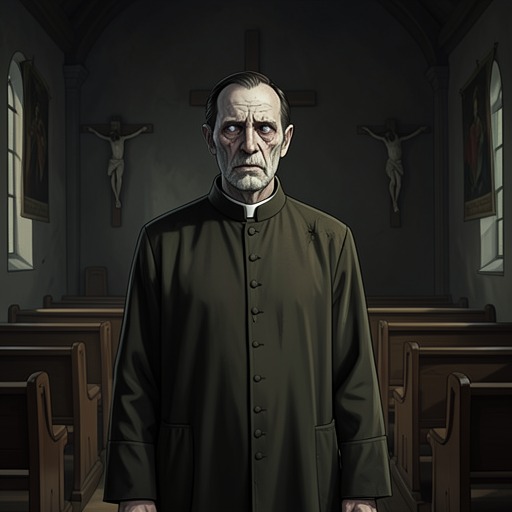
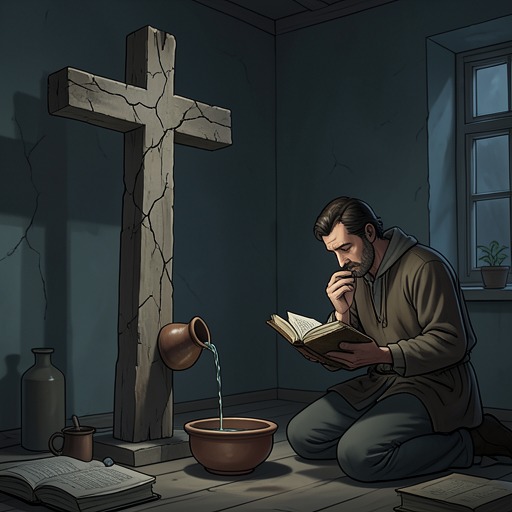
Father Callahan makes the statement while considering whether to accompany Matt Burke in investigating the phenomena reported in Jerusalem’s Lot. He refuses to treat the church’s objects and ceremonies as harmless props. A younger priest might regard holy water or other rituals as symbolic comforts that could ease a frightened person’s anxiety, but Callahan cannot approach the matter in that spirit. If he goes with the Host, he explains, he goes as an agent of the Holy Catholic Church and as Christ’s representative on earth.
The distinction separates genuine religious action from theatrical reassurance. Callahan acknowledges that he is jaded, cynical, and suffering a crisis involving faith or identity, yet he still believes in the “awesome, mystical, and apotheotic power” of the church behind him. His uncertainty does not erase the institution’s authority; instead, it makes his decision more grave. A priest who no longer feels spiritually secure may be especially reluctant to claim the church’s power unless he believes the circumstances truly warrant it.
The Force of Institutional Faith
Callahan rejects the idea that the church is only a bundle of ideals or a spiritual equivalent of a youth organization. His language converts the church from an abstraction into an operative presence. The church stands behind the individual priest, and that collective authority gives religious rites a significance beyond the priest’s private personality or emotional state.
The expression also establishes a condition of responsibility. Because the church is a Force, “one does not set a Force in motion lightly.” Callahan insists that Matt understand this before he agrees to participate. His concern is not merely procedural. The request asks him to test the church against an apparent impossibility, and doing so risks exposing whether his faith is living conviction or empty habit. The power he invokes must therefore be approached with reverence, caution, and an acceptance of its implications.
From Doubt to Action
Matt argues that the investigation may be Callahan’s opportunity to put the church to the test. Callahan initially recognizes that this proposal contradicts the solemn caution he has just expressed: testing the church could seem to reduce a sacred power to an experiment. Yet he ultimately agrees, subject to a condition that follows from his understanding of the church’s force. His consent marks a movement from private crisis toward public responsibility.
The decision does not present faith as effortless certainty. Callahan’s crisis remains part of the expression’s meaning. He acts while admitting weakness, but he does not confuse personal weakness with the absence of spiritual power. The scene consequently makes religious action a deliberate commitment rather than a reflex. Callahan’s agreement carries weight because he has first acknowledged the danger of treating sacred authority lightly.
Narrative and Thematic Significance
The phrase gives the supernatural conflict a religious dimension that is more substantial than atmosphere or symbolism. The church’s rites become possible means of resistance because the novel presents faith as a power capable of confronting evil, while also emphasizing that such power depends on serious belief rather than empty ceremony. Callahan’s distinction between the church’s practical force and its merely symbolic trappings prepares the reader for a conflict in which spiritual objects and institutional authority may have real consequences.
The expression also creates an important contrast between apparent impossibility and corroborated evidence. When Callahan later hears the accounts from Ben Mears, Mark Petrie, and Matt Burke, he faces what seems to be an impossibility supported by a writer, a levelheaded child, and a respected doctor. His first response is still incredulity: an impossibility remains an impossibility. Yet the evidence has made it impossible to dismiss the matter as one person’s fear or delusion. The church’s Force is thus placed at the boundary between skepticism and recognition, where an institution must decide whether its inherited language can answer a reality that ordinary explanations cannot contain.
The statement ultimately defines Callahan’s role. He is not simply a clergyman supplying ritual assistance, nor merely a doubtful observer of other people’s claims. He is the representative of an institution whose spiritual authority he believes can alter the struggle, even though he approaches that authority with fear and self-questioning. “The church is a Force” therefore names both the promise and the burden of faith: it can resist supernatural evil, but it must be invoked consciously, responsibly, and without pretending that sacred power is harmless symbolism.